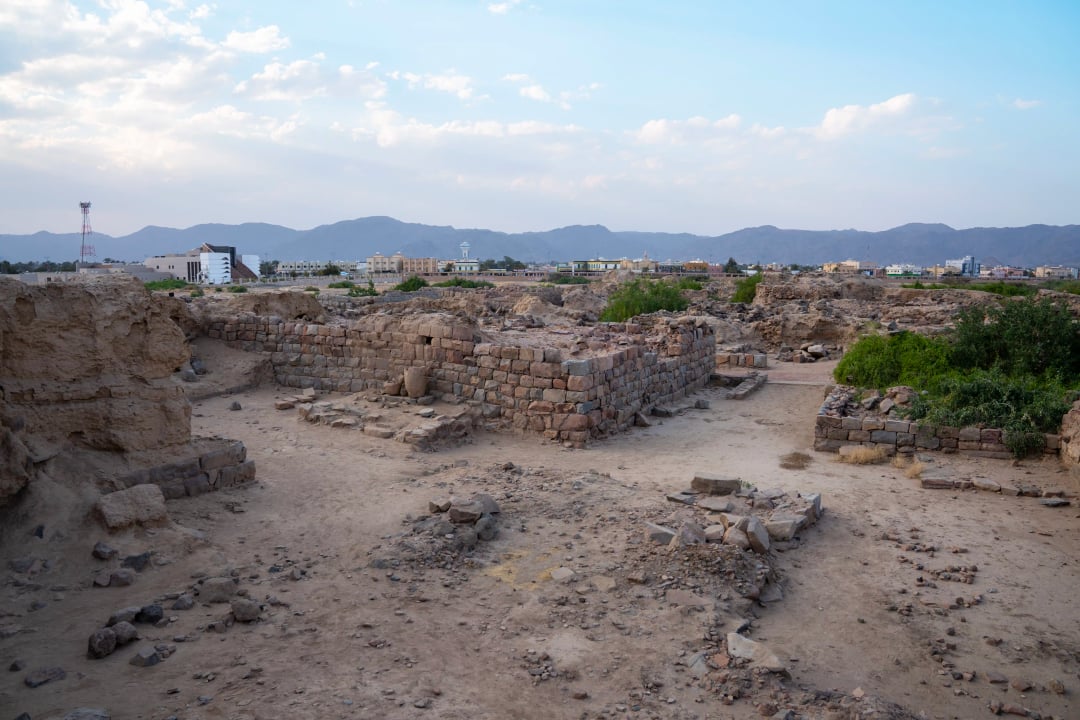
Al-Qishlah Palace


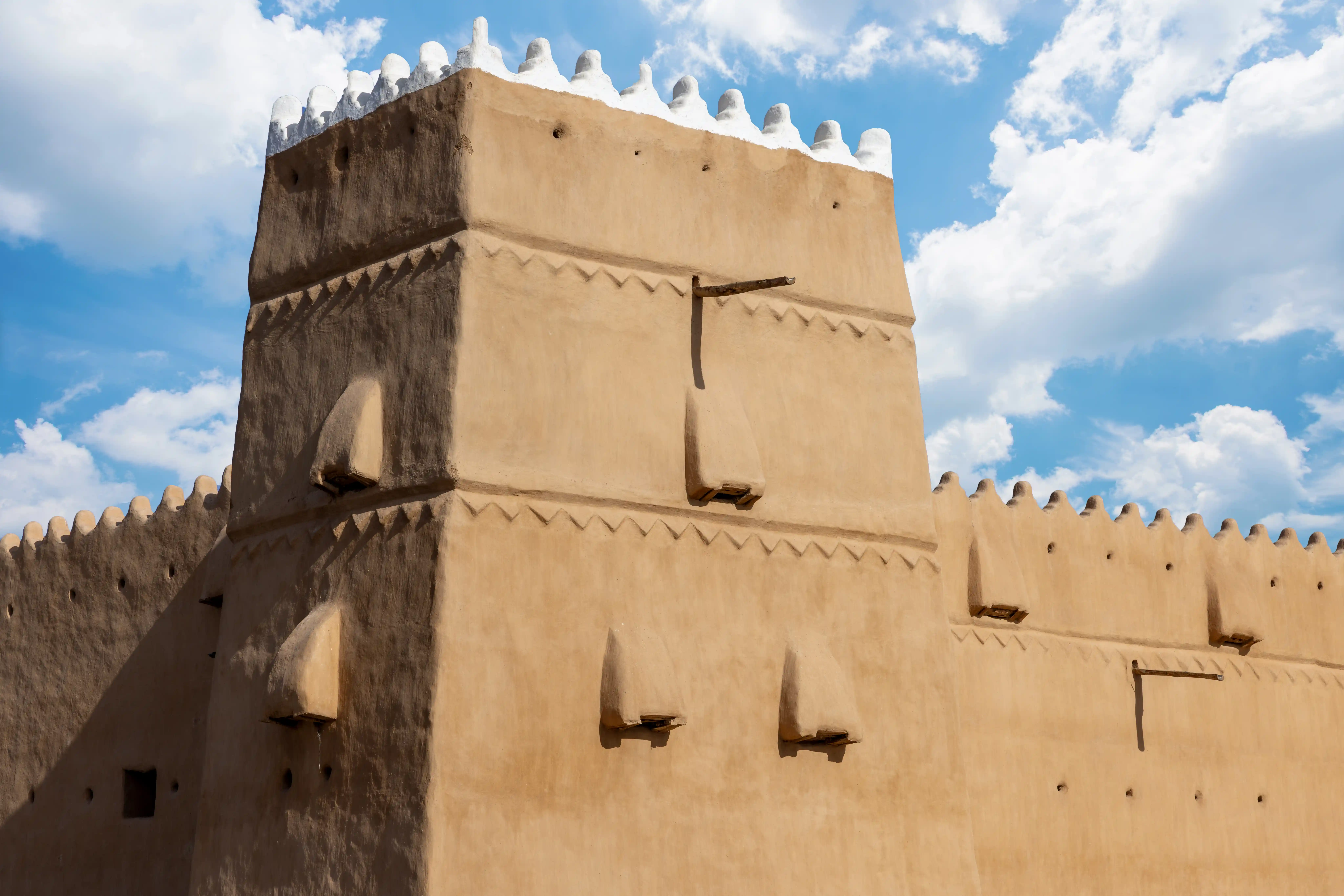
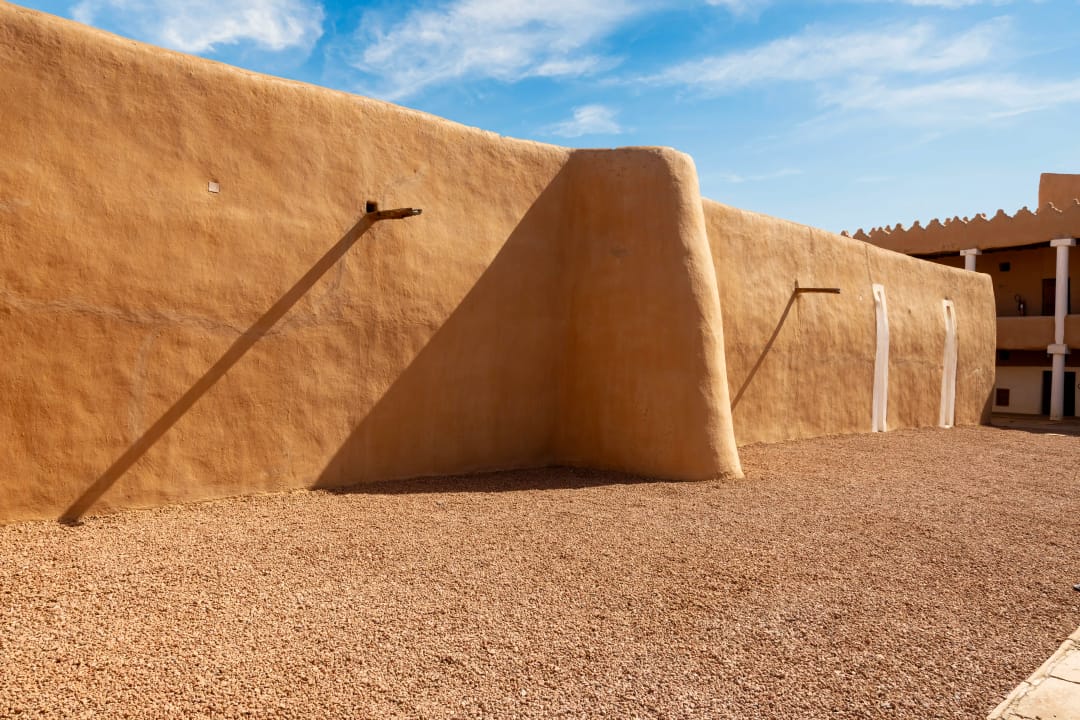
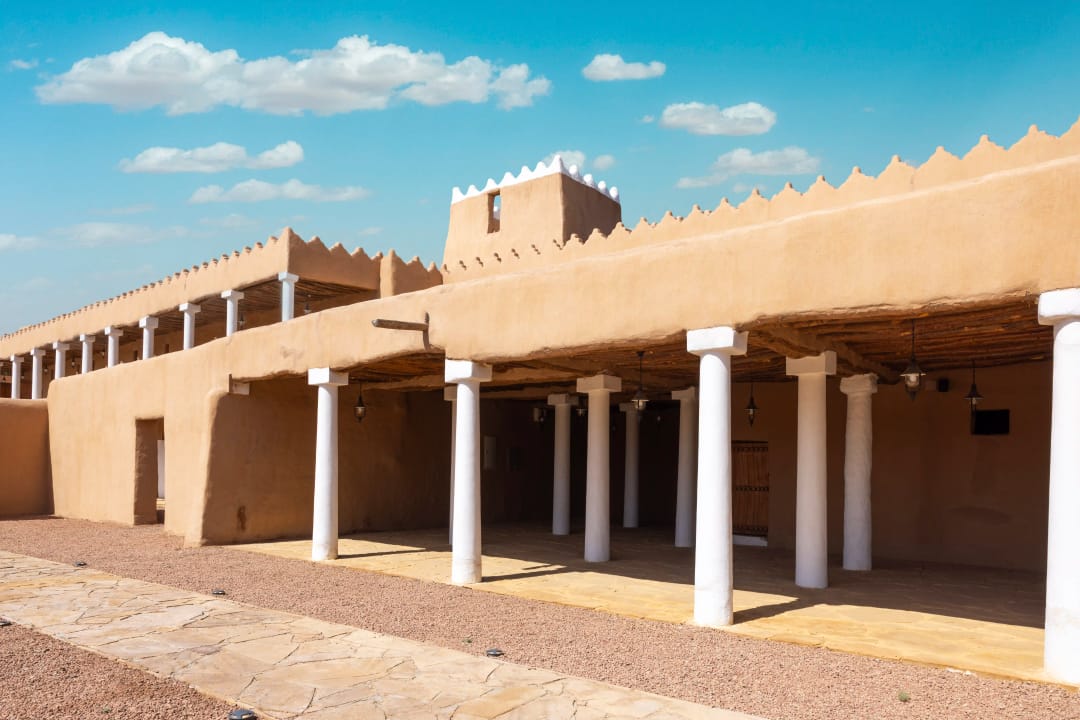
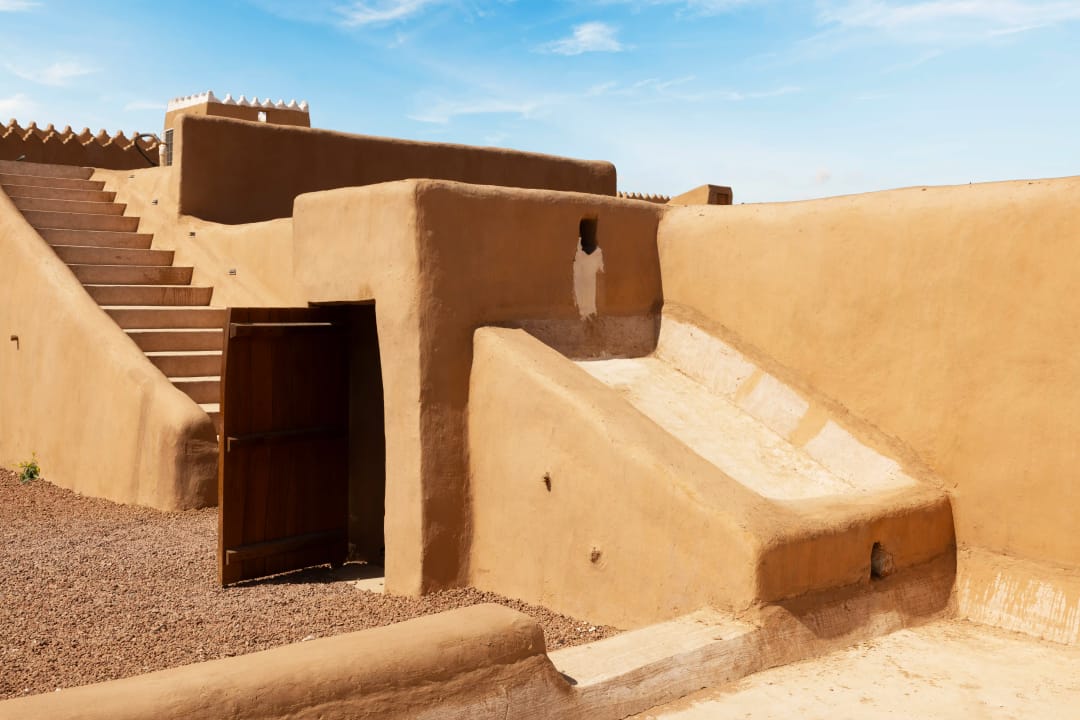
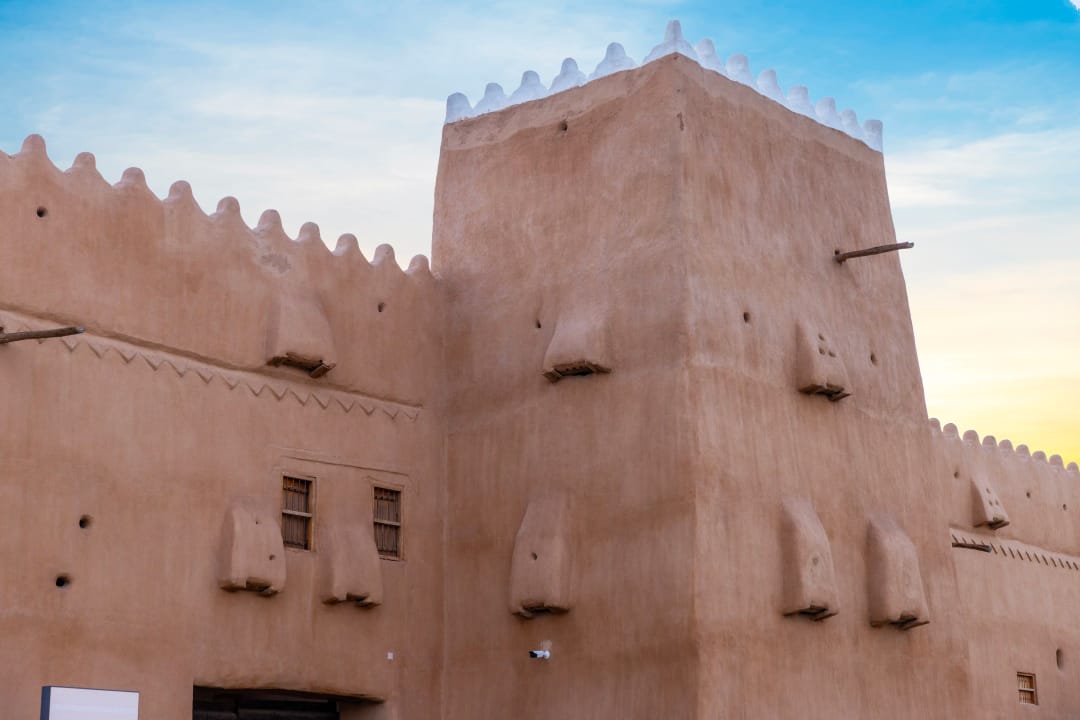
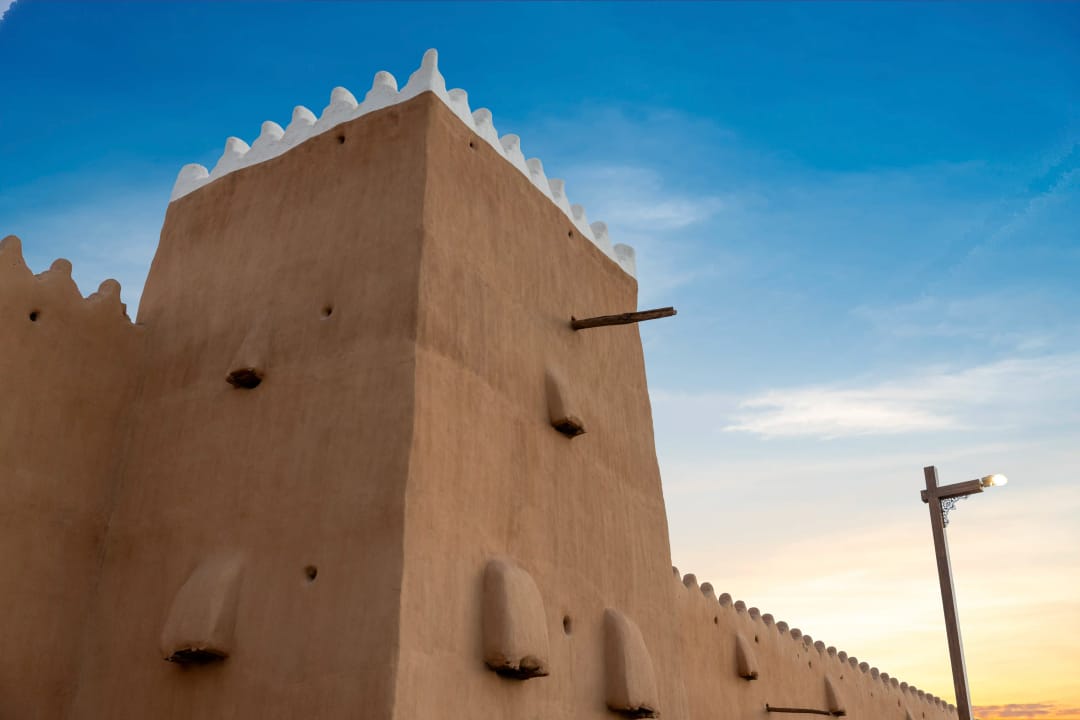
Located in the center of the city of Ha'il, Al-Qishlah Palace is a lofty monument of ancient history, and has emerged as one of the most important architectural heritage sites. Built during the reign of King Abdulaziz in 1360 AH/1941 AD, this palace is known for its typical traditional architecture inspired by the Najdi style. It is made of mud, adobe, and stone, and is decorated with geometric and plant plaster motifs reflecting the architectural styles of Ha'il at that time. Al-Qishlah Palace consists of two floors comprising 143 rooms, and has an area of 20,000 m². It is fortified by four square defensive towers on its corners and four towers in the middle of the walls. It also has two large gates and an internal mosque. A remarkable feature of the palace rooms is their interior stucco decoration and engraved doors and windows, which adds an aesthetic touch. A large courtyard occupies the center of the palace and is surrounded by arcades roofed with palm fronds and tamarisk trunks, providing visitors with an open space reflecting the spirit of traditional architecture. In the past, this palace was used as a military post for mobilizing and deploying armies. The courtyard hosted soldier training and parades, while the rooms served as military and administrative offices, and as weapons stores. The palace is thus a testimony to a significant period in the history of the kingdom. Al-Qishlah Palace has retained its distinctive architecture and rich history. In 2024, the palace was reopened upon the completion of restoration works by the Heritage Commission, which endowed the palace with a new life. A key attractive feature of the palace today is its integration with the present. Outside the walls of the palace, visitors can find traditional restaurants, exhibition spaces, and antique stores selling traditional products. These innovations make Al-Qishlah Palace a vibrant heritage site, attracting visitors from all walks of life.