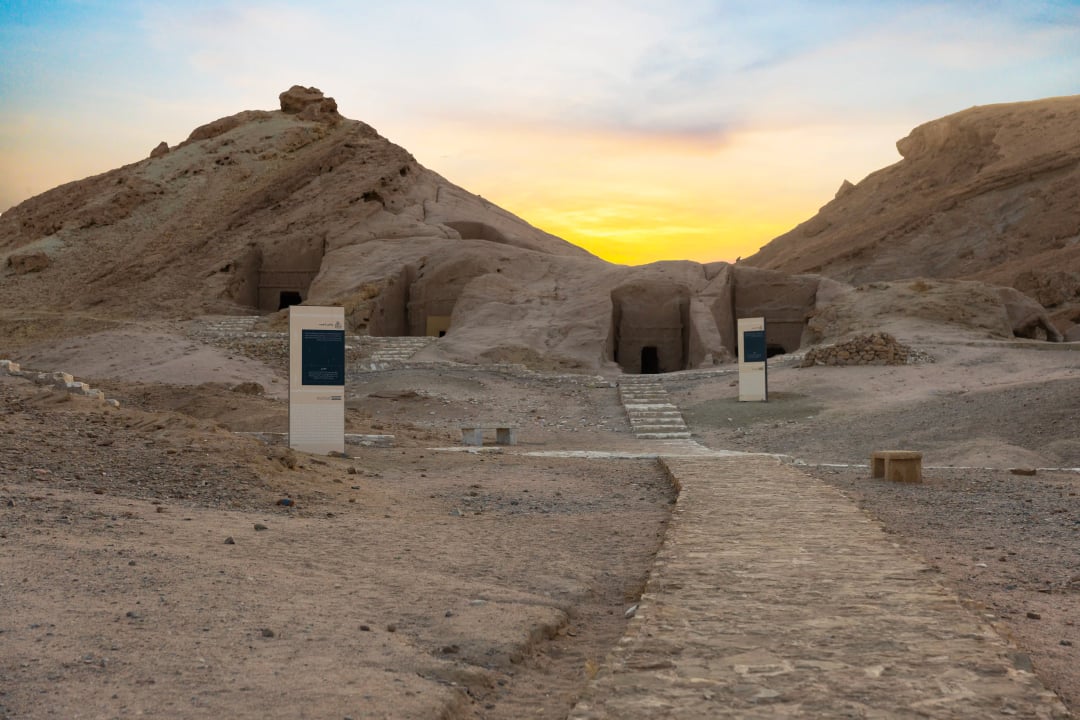
Le mont Oumm Sinmane


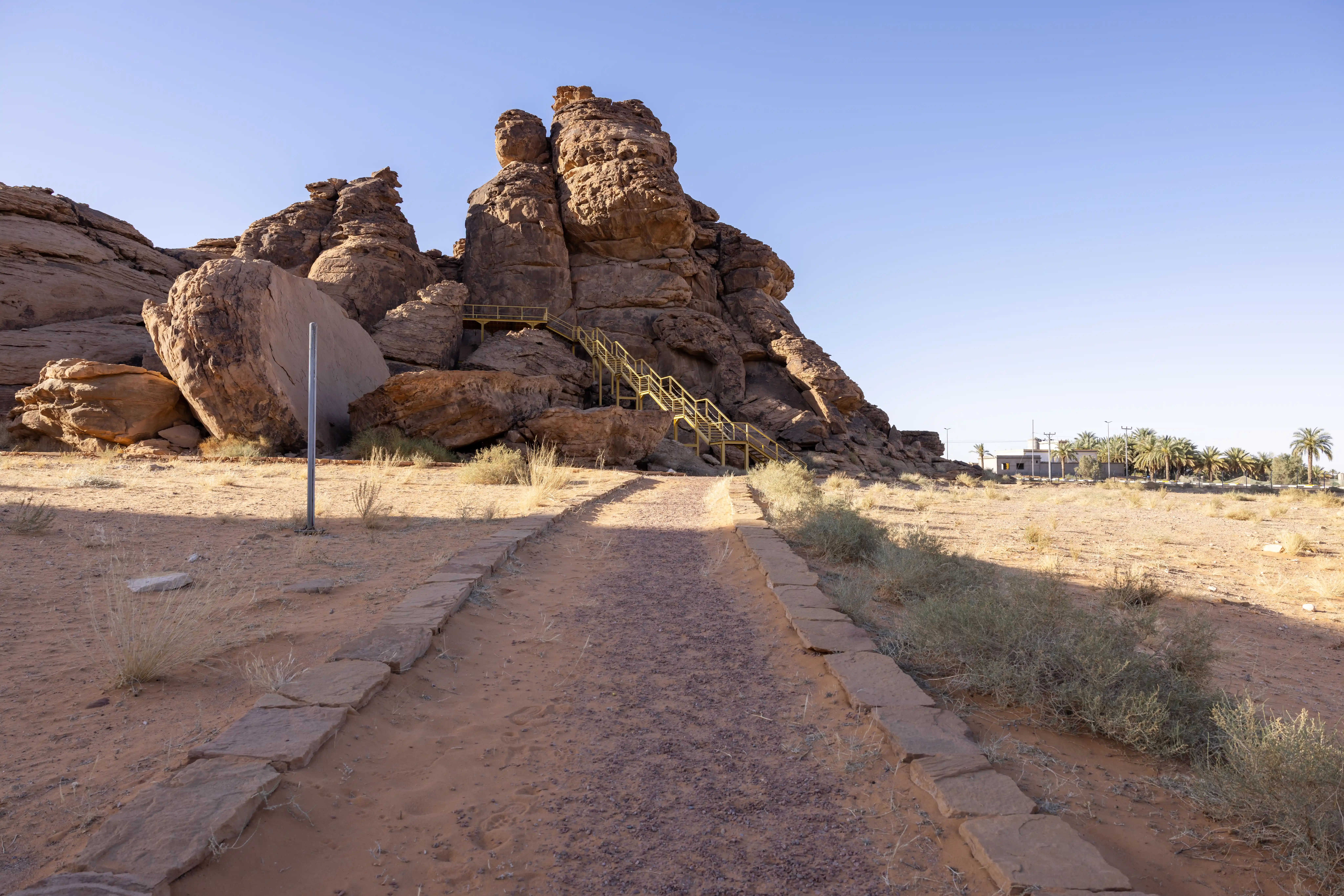
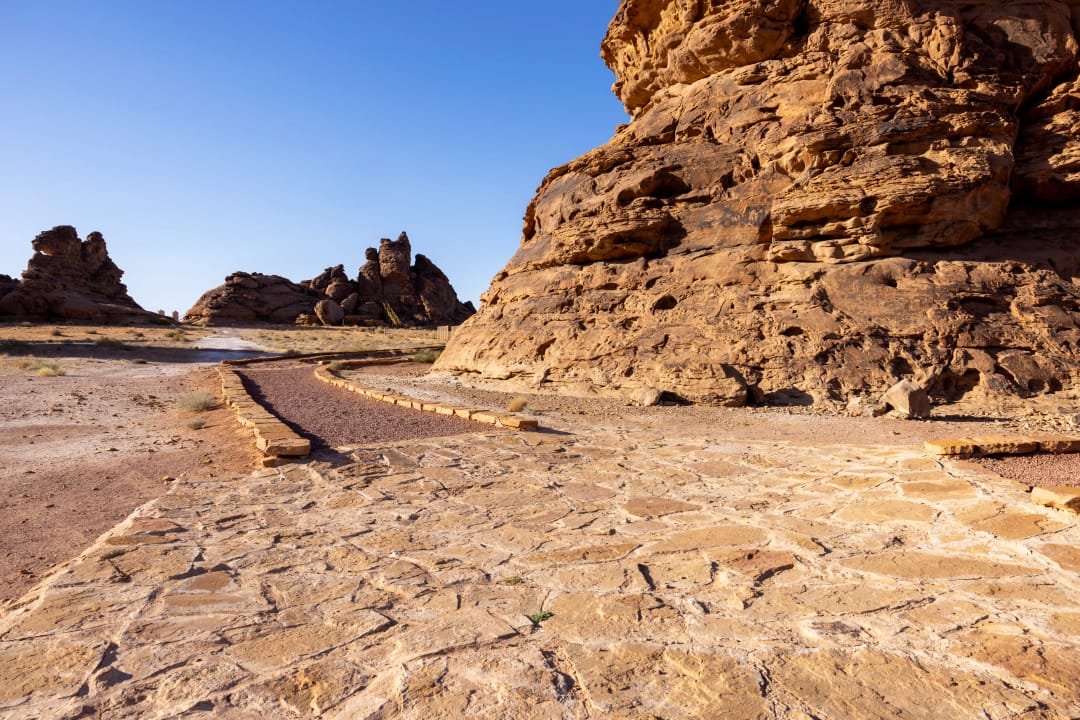


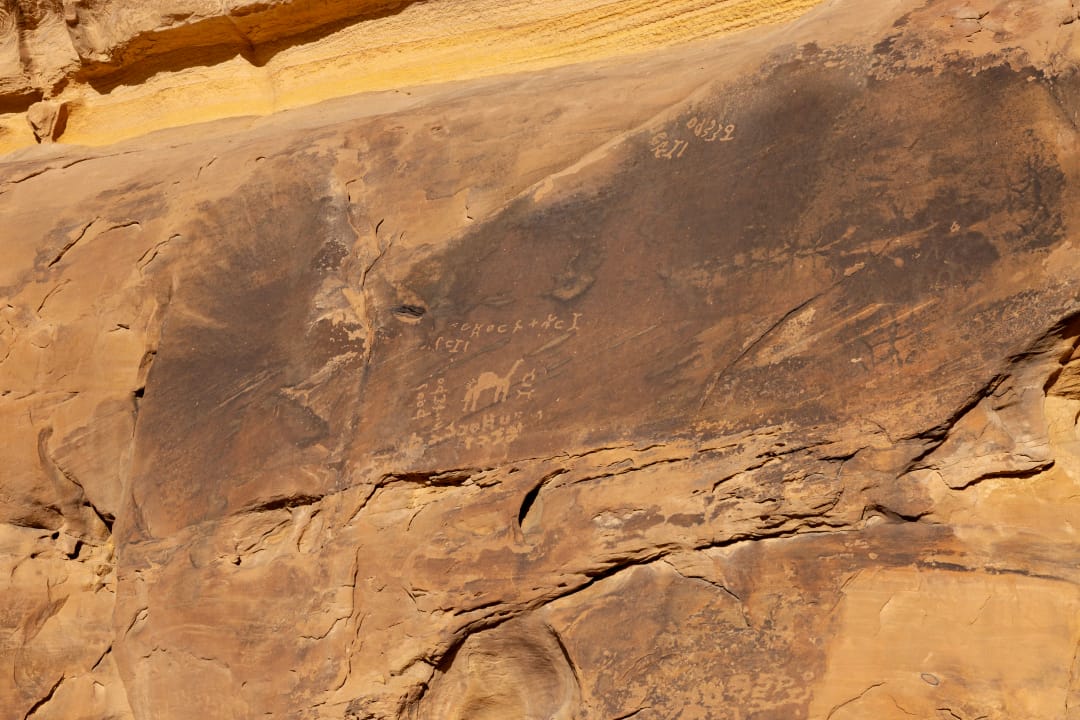
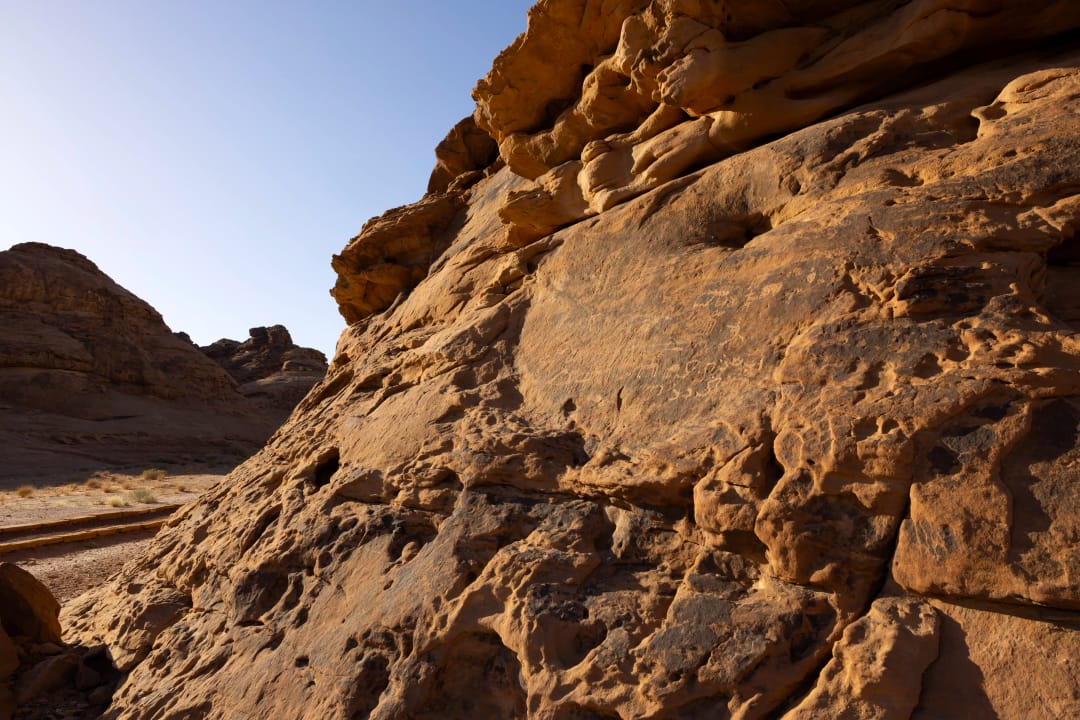
The city of Jubbah is located at the heart of the Great Nafud Desert, 100 km northwest of Hail. Covering an area of approximately 12,500 km², it is one of the most important archaeological sites in the Kingdom. It serves as an open museum of rock art, featuring numerous drawings and inscriptions on various aspects of the life of ancient human settlers. The rock art at the site dates back to four different periods: • The first period: Representations dating back to this period are known as "early Jubbah style," which is over 10,000 years old. Important drawings from this period are full life-size human and animal representations. • The second period is known as the Thamudic period. Drawings and inscriptions from this period are 1,500-2,500 years old. This period is characterized by representations of human and animal figures- particularly horses and camels, scenes of ostrich hunting and palm trees. There is also a significant number of Thamudic inscriptions. • The third period, known also as the Arab period, is characterized by miniature representations of humans, ibex, and horses. • The fourth period, discovered recently, is the last period of ancient settlements in this area. It is known as the Islamic period and is characterized by Islamic inscriptions in primitive Kufi script, consisting mostly of Quranic verses and prayers. Jubbah has been a vital center of cultural and social exchange since antiquity. Nearby, there was a large lake surrounded by rocks behind which hunters could hide. An important landmark in Jubbah is Um Sinman Mountain, which resembles a two-humped camel sitting on the ground, hence its name in Arabic. The mountain is not just a natural landmark; it was also a safe refuge for pre-Islamic Arabs who sought natural protection in the desert. The site is a living record of inscriptions documenting the evolution of human and animal life, the evolution of which can be divided into two periods. The first period dates back to the seventh millennium BC and is characterized by representations of full human figures with slender arms and stocky bodies. There are also representations of some animals, such as camels, wild horses, ibex and hunting dogs. The other period dates back to the Thamudic era and is characterized by inscriptions representing scenes of camel domestication and warriors armed with spears on camelback, in addition to representations of ibex, leopards, palm trees and some symbolic shapes. In 2015, Um Sinman Mountain was placed on the UNESCO World Heritage List. It is an important global archaeological site that provides a window into ancient history and cultures.